Ovulation pain, also called mittelschmerz, is a one-sided ache or twinge in the lower belly that some people feel when an ovary releases an egg, about two weeks before their next period. It usually lasts from a few minutes to a few hours, sometimes a day or two, and is harmless. Heat and an over-the-counter pain reliever are usually enough. Pain that is severe, keeps getting worse or comes with fever, fainting or a positive pregnancy test is not ovulation pain and needs prompt medical care.
The short version
- Mittelschmerz is common: Cleveland Clinic estimates it may affect up to 40 percent of people who ovulate.
- It is felt on one side of the lower belly, on the side of the ovary releasing an egg, and can switch sides from month to month.
- It typically lasts minutes to hours and rarely more than one or two days.
- Warmth, rest and an over-the-counter pain reliever usually help. Birth control that stops ovulation can prevent it.
- Sudden severe pain, pain with fever or fainting, or pain with a positive pregnancy test needs urgent care.
What ovulation pain feels like
People describe it in different ways: a dull, cramp-like ache, a sudden sharp twinge, or a feeling of pressure low on one side. The NHS notes that it affects one side of the tummy at a time and that the side can change depending on which ovary releases an egg that month. Some months you may feel it clearly, other months not at all.
A little clear discharge or light spotting can come along with it. Both are linked to the hormone changes around ovulation. If you notice mid-cycle spotting, our article on ovulation bleeding explains what is typical. Other mid-cycle changes, such as tender breasts or a higher sex drive, are covered in our guide to ovulation symptoms.
How long does it last?
Mayo Clinic describes mittelschmerz as lasting a few minutes to a few hours, and sometimes a day or two. The NHS gives the same range. Pain that lasts longer than two days, or that keeps getting stronger instead of fading, is a reason to get checked.
Why ovulation can hurt
The exact cause is not known. Mayo Clinic describes two likely explanations:
- Stretching of the ovary. In the days before ovulation, the follicle holding the egg grows and stretches the surface of the ovary.
- Irritation from fluid. When the follicle releases the egg, a small amount of fluid or blood comes out with it and can irritate the lining of the abdomen (the peritoneum).
Neither process is harmful. It is part of a normal cycle, and having ovulation pain does not mean anything is wrong with your fertility.
How to tell it is ovulation pain
Timing is the strongest clue. Ovulation pain shows up around the middle of your cycle, about 14 days before your next period, and follows a similar pattern from month to month. In a 28 day cycle that is around day 14, but in a 35 day cycle it is closer to day 21.
- Note the date and side. Write down when the pain started, which side it was on and how strong it felt on a scale of 1 to 10.
- Count back from your next period. When your period starts, check whether the pain was roughly two weeks earlier.
- Compare with your estimated ovulation day. The calculator below estimates your ovulation day from your cycle length.
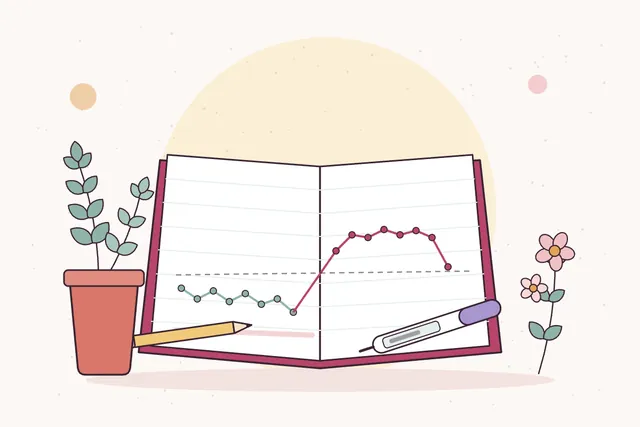
- Add an objective sign if you want certainty. A positive LH ovulation test or slippery, egg white mucus in the same days supports the link. Our overview of the signs of ovulation compares the options.
If your periods are irregular, a mid-cycle pattern is harder to see. The period calculator helps you keep track of your cycle lengths over a few months.
Relief for ovulation pain
Most ovulation pain fades without treatment. These measures can make it easier:
- Warmth. A warm bath, a heating pad or a hot water bottle on your lower belly. The NHS suggests a warm bath as a simple first step.
- Over-the-counter pain relief. The NHS mentions paracetamol (acetaminophen in the US) or ibuprofen. Follow the label, and if you are trying to conceive or might be pregnant, ask a pharmacist which option suits you.
- Rest and gentle movement. Some people find that lying down helps, others feel better with a slow walk.
- Hormonal birth control. If the pain is regular and bothersome and you are not trying to conceive, contraception that stops ovulation, such as the pill or the implant, can prevent it. Talk to your clinician about whether it is a good fit.
Pain is not a fertility timer
Feeling ovulation pain suggests you probably ovulated in that cycle, but it is not exact enough to time sex. Sperm can survive for several days and the egg only about 12 to 24 hours, so the most fertile days are the ones before ovulation. Use the pain as a hint, and LH tests or mucus for timing. Ovulation pain is also not a reliable way to avoid pregnancy.
When pain is not ovulation
Several other conditions can cause pain low on one side of the belly. Some are harmless, some are emergencies. The NHS lists endometriosis, ovarian cysts, sexually transmitted infections such as chlamydia, scar tissue (adhesions) after surgery and ectopic pregnancy as possible causes of similar pain.
| Possible cause | Clues that point to it | What to do |
|---|---|---|
| Endometriosis | Painful periods that get worse over time, pain during or after sex, pelvic pain at other times of the cycle | Book an appointment with your doctor or gynecologist |
| Ovarian cyst | Ongoing ache or pressure on one side; a cyst that bursts can cause sudden, sharp pain | See a doctor; get urgent care for sudden severe pain |
| Ovarian torsion (twisted ovary) | Sudden, severe one-sided pain, often with nausea or vomiting | Emergency care right away |
| Ectopic pregnancy | Missed or unusual period or a positive test, one-sided pain, vaginal bleeding, pain at the tip of the shoulder, dizziness or fainting | Emergency care right away |
| Appendicitis | Pain that starts around the belly button and moves to the lower right, gets worse over hours, with fever, nausea or loss of appetite | Emergency care right away |
| Pelvic infection (for example chlamydia) | Pelvic pain with unusual discharge, fever, pain during sex or bleeding between periods | See a doctor soon for testing and treatment |
A useful rule of thumb: ovulation pain is mild to moderate, comes at a predictable time, and fades on its own. Pain that is severe, unusual for you, lasts longer than a couple of days or comes with other symptoms deserves a medical opinion.
When to see a doctor
- Go to the emergency room or call 911 for sudden, severe pelvic or belly pain, pain with fainting, dizziness or a racing heart, pain with fever and vomiting, or pain with a positive pregnancy test or vaginal bleeding.
- See your doctor if the pain does not improve with over-the-counter pain relief, lasts more than two days or comes back at different times of the cycle.
- See your doctor for very heavy periods, bleeding after sex, bleeding between periods that keeps happening, or any bleeding after menopause.
- See your doctor if you have pain during sex or unusual discharge.
- If you are trying to conceive, ask about a fertility evaluation after 12 months of trying if you are under 35, after 6 months if you are 35 or older, and sooner if you are over 40 or your periods are irregular or absent.
Frequently asked questions
Is it normal to have ovulation pain every month?
For some people, yes. Others feel it only now and then, or never. As long as the pain is mild, short and comes at the same point in your cycle, it is usually nothing to worry about.
Why is the pain on a different side each month?
Usually one ovary releases an egg in each cycle, and you feel the pain on that side. Which ovary takes its turn can change from cycle to cycle.
Is ovulation pain a sign of pregnancy?
No. Ovulation pain happens before fertilization could take place, so it says nothing about whether you will become pregnant that cycle. If you think you might be pregnant and have one-sided pain, take a pregnancy test and contact your doctor.
Can birth control stop ovulation pain?
Methods that stop ovulation, such as the combined pill or the implant, can prevent mittelschmerz. That is not an option if you are trying to conceive, in which case heat and pain relief are the usual approach.
Sources
- Mayo Clinic: Mittelschmerz, symptoms and causes
- Cleveland Clinic: Ovulation Pain (Mittelschmerz); Ovulation
- NHS: Ovulation pain; Ectopic pregnancy, symptoms
- Mayo Clinic: Ovarian cysts; Appendicitis
- American Society for Reproductive Medicine (ReproductiveFacts): Ovulation Detection, patient fact sheet
- American College of Obstetricians and Gynecologists: Evaluating Infertility (FAQ)